
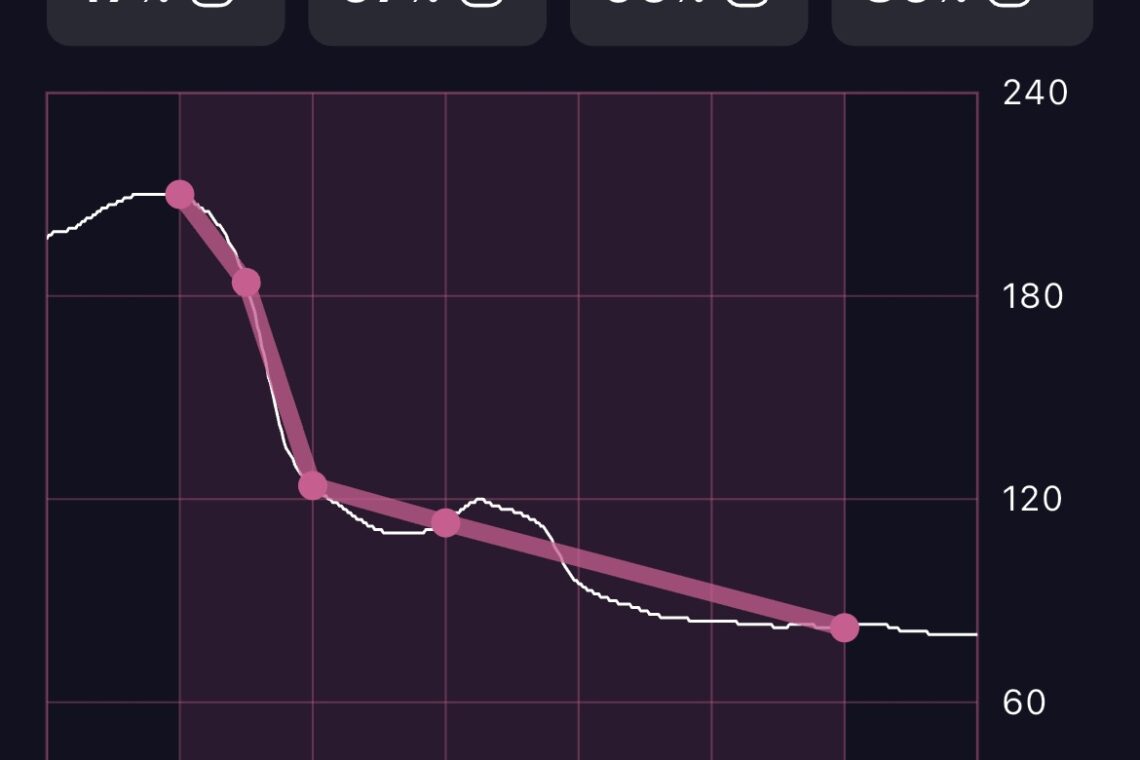
By tracking HRR consistently, trainers can identify emerging issues before they become more serious. This can help protect welfare, support performance, and reduce the time and cost associated with treatment and recovery.
This is not just theory. The technology is already delivering these benefits for trainers.
One example involved a colt in training for a Group-level campaign. After a regular piece of morning work, the trainer reviewed the data and saw that five-minute HRR was clearly worse than previously observed: 128 bpm from a peak of 218 bpm, compared with the horse’s usual figure of 85 bpm.
The horse had not been asked to do any more work than usual. It showed no outward signs of lameness, reduced appetite, behavioural change or reduced performance. There were no visible signs of distress.
The S-PRO data told a different story. It was a potential early indicator of systemic stress or subclinical illness.
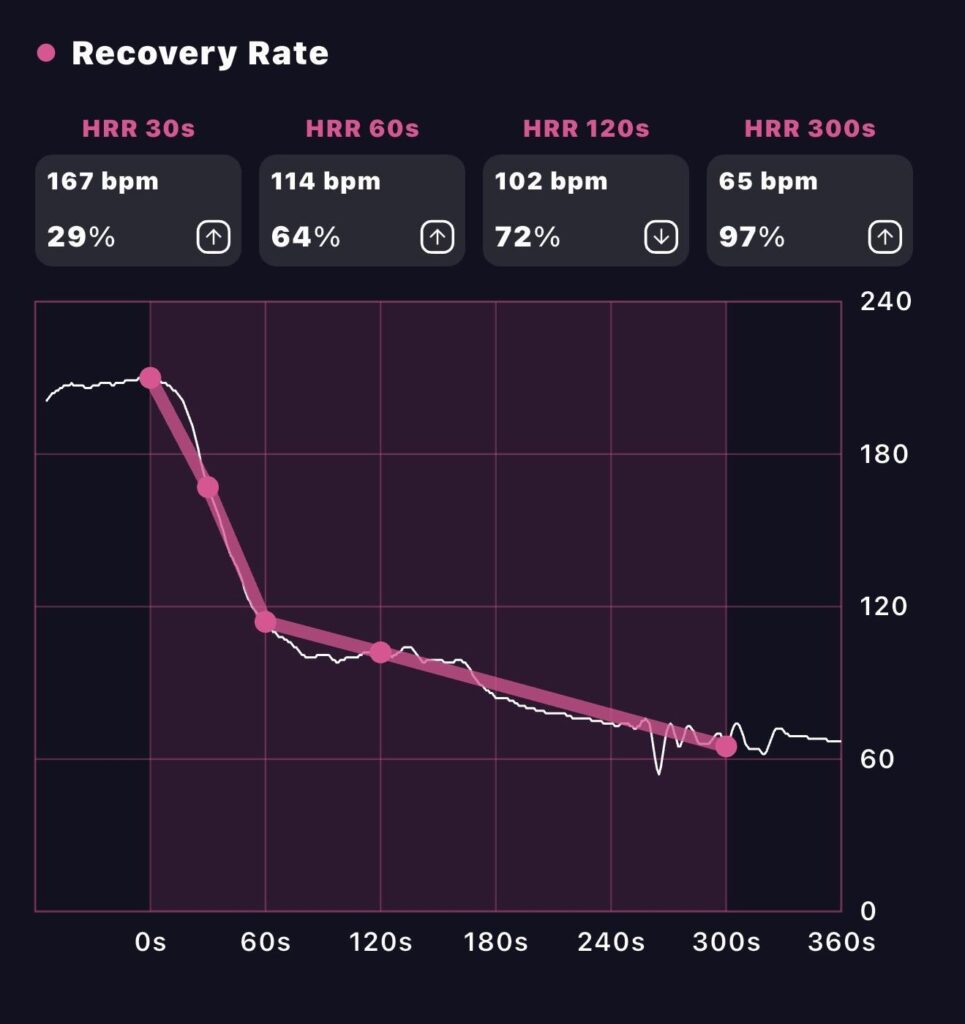
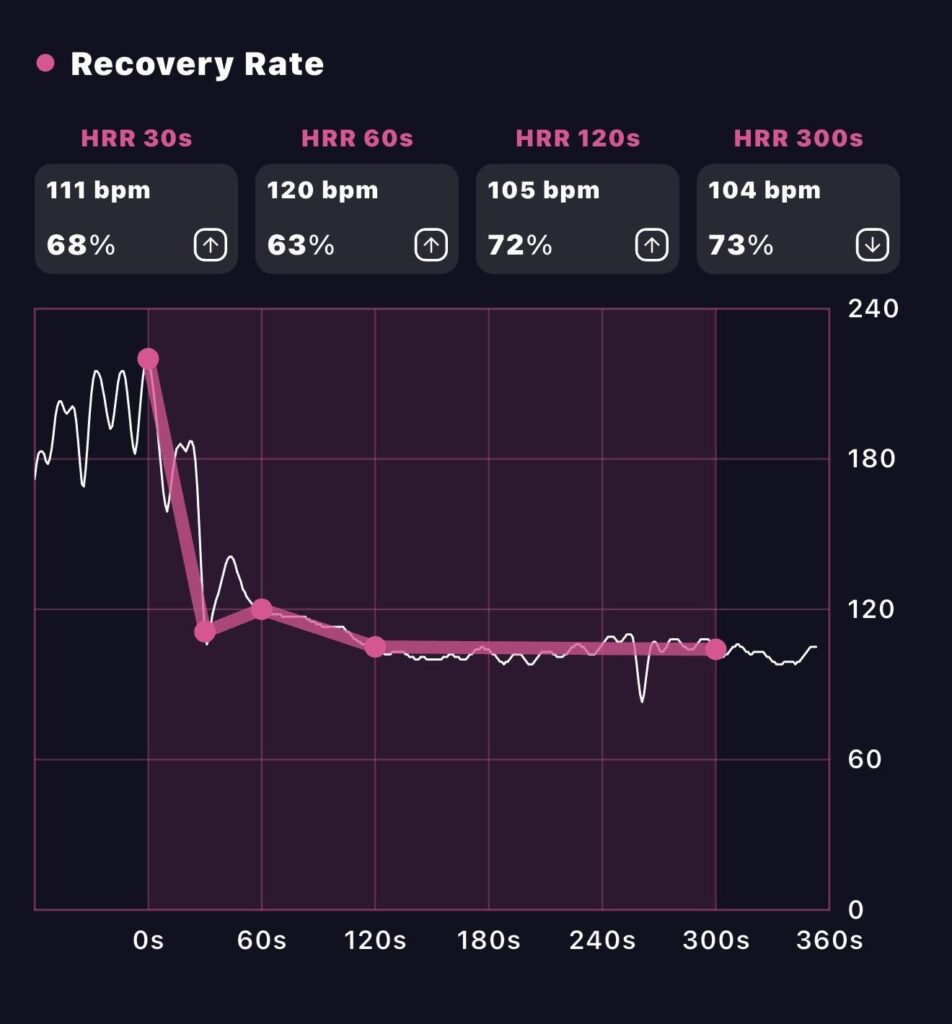
Left: Normal HRR Graph showing expected recovery rate. Right: Abnormal recovery trend showing heart rate failing to come down.
Based on that data, the trainer requested a veterinary examination, which confirmed a fever. Blood work showed an elevated white-cell count and fibrinogen levels consistent with a bacterial infection. The horse was diagnosed with a lower-respiratory bacterial infection.
Treatment began immediately. Within 48 hours, the horse’s temperature had normalised to 38.2°C. The horse resumed light canter work on day 4 and was back in full training within 10 days. Three weeks later, the horse won a Group 2 race.
Without the S-PRO data, treatment would likely have been delayed and the outcome may have been very different. A 4–6 week layoff would be more typical in a case like this, and potential progression to pleuropneumonia and more invasive treatment could not be ruled out.
If you would like to understand how S-PRO can help protect your own horses in the same way, drop us a line.