
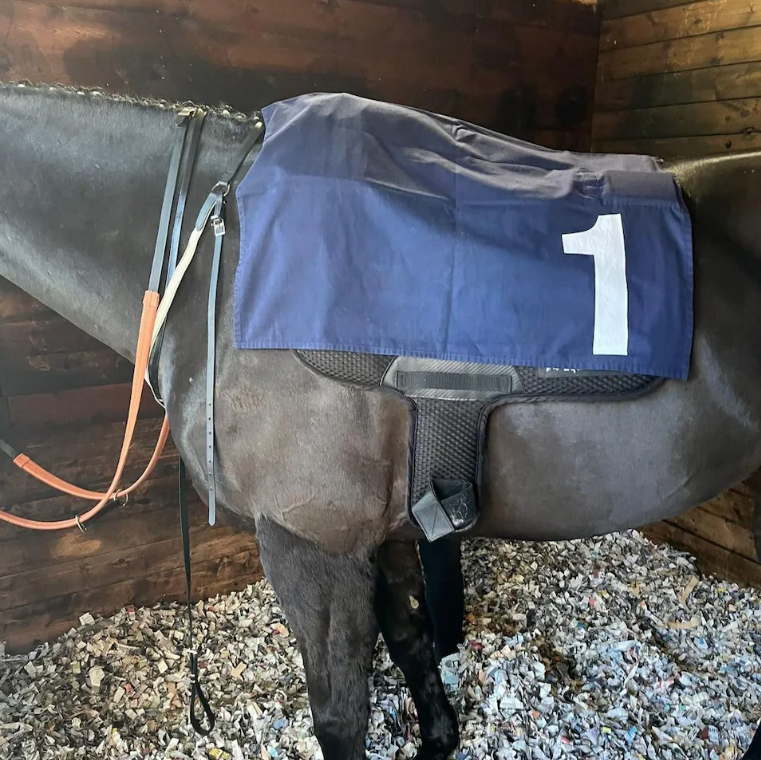
British racing is fitting horses with heart monitors in a trial to find out why some thoroughbreds collapse and die during races.
The first three horses were fitted with a “wearable” heart monitor in an under-the-saddle pad as the new equipment was trialled at Ascot last week.
Exercise Associated Sudden Death (EASD) in racehorses is a rare occurrence. It affects 0.04 per cent of starters, of which 0.02 are believed to be heart related. It is often hard for pathologists to prove in a post-mortem, and is an assumption in the absence of any other signs.
Recent advances in technology have allowed accurate ECGs to be obtained from galloping horses. Until recently the technology has not been there to monitor hearts in race conditions, and the deaths of great horses – such as Best Mate and Persian Punch – were classed as “heart attacks” with little evidence to support that assertion.
Dr Sally Taylor, the British Horseracing Authority’s Head of Equine Regulation, Safety and Welfare, says: “By investigating the electrical activity of the horse’s heart during racing and training we will be able to better understand why some horses suffer cardiac arrest with the ultimate aim of screening horses to prevent it happening.”
One day a heart monitor may become as much part of what a horse carries in a race as a saddle and girth. And a jockey may be able to pull up a horse if its ECG is showing signs of an imminent heart problem or an alteration in its stride pattern which suggests there is risk of an imminent injury.
On top of which, if a horse is fatally injured as a result of a fall, the device can help establish if the heart was out of rhythm.
It is not quite as simple as bunging a heart monitor on a horse in a race. It has to be safe and sensible, nothing the jockey or horse can be tangled up in. The weight of the monitor (2lbs) is a factor especially on the Flat and it needs to provide a reliable ECG, which is what is being tested now.